
Prosecutorial Misconduct is Not New
Say "Trump's DOJ" one more time, I dare you.

Nothing’s ever paywalled, but your paid subscriptions sure are helpful! Subscribe free or paid:
To level-set: Donald Trump has weaponized the Department of Justice to attack political enemies, real and perceived. In general, Donald Trump has abused government power in ways that are arguably unique, and inarguably terrible and worse than his modern predecessors. #NotEverySingleProsecutorProbably. I agree with you, okay?
Now let’s talk about how the underlying systems being abused were already weaponized against huge swathes of the country, because if I have to hear one more person say something that implies Donald Trump invented prosecutorial misconduct, I may go insane. Problems must be acknowledged to be fixed. We cannot acknowledge them, not really, while pretending they are anything other than the result of a system doing what it did already, just to lower-profile people.
First, we have to revisit the story of the Broadview 6 case and the prosecutorial misconduct that caused its demise.
In October 2025, six Chicagoland protestors were federally indicted on both misdemeanor and felony charges for alleged conduct during a protest outside an ICE facility in Broadview, one that is not a detention center but being used as one. The people detained in Broadview, in violation of state law, have reported truly horrifying treatment.
The government’s indictment was based on protestors “blocking” an ICE vehicle that had literally driven into them (I was there, it was insane) while a crowd was participating in a Jericho Walk across a side street used to access the Broadview facility. The very worst of the government’s alleged conduct was minor damage to the vehicle.
There were dozens of protestors present, and only six indicted. All of them had connections to the Democratic Party, except for Joselyn Walsh, a musician who the government appeared to be angry at because photographers had documented an ICE agent shooting a “less lethal” round through her guitar. One of them was Kat Abughazaleh, a high-profile Congressional candidate whose pre-campaign career had included Media Matters work on the far right, infuriating a lot of them.
The indictments came amidst many federal indictments of anti-ICE protestors and, occasionally with overlap, federal indictments of the President’s political adversaries. The government struggled to obtain convictions in these cases. They even struggled to obtain indictments, incredibly uncommon because the government gets to obtain indictments in a grand jury proceeding that the defense does not know is happening.
In March 2026, the charges against Walsh and one other protestor, Cat Sharp, were dropped. In April, the felony charges were dropped. And in late May, after Judge April Perry finally read the transcripts of the grand jury proceedings, something the defense initially moved to request at the beginning of April, the government dismissed all remaining charges days before the scheduled trial.
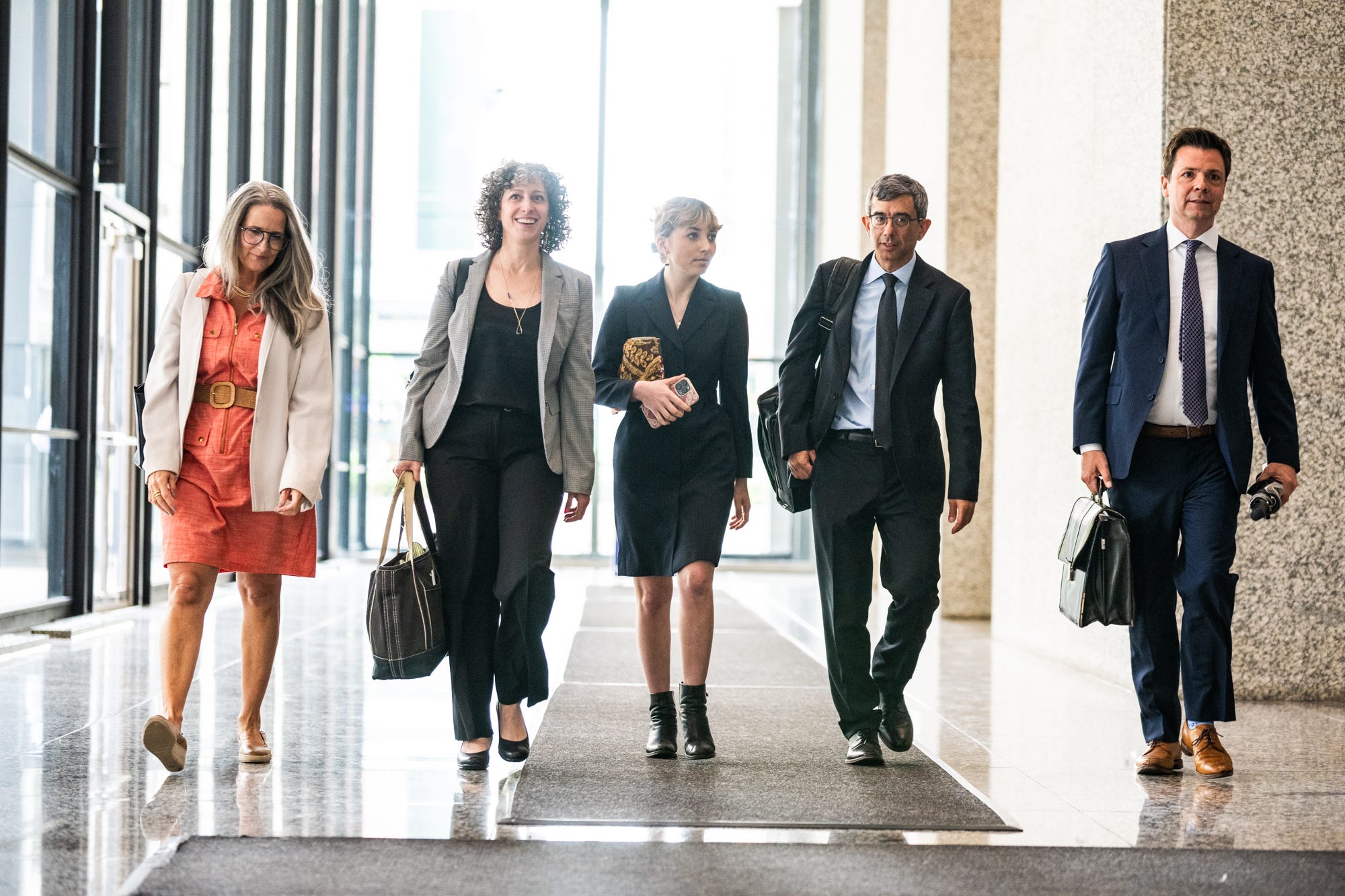
The grand jury transcripts have since been unsealed, a rarity, and reveal that the DOJ initially failed to obtain an indictment at all. They can just keep going, and they did, finally obtaining their indictment after dismissing a juror who called the case “a crock of shit.” Judge Perry declared the misconduct shocking. Coverage has framed the behavior as exceptionally bad, indicative of Trump’s weaponization of the Department of Justice. Which is weird, because the attorney who obtained the indictment had worked at DOJ for almost twenty years, and her misconduct in grand juries just led to the dismissal of another case. That case has nothing to do with Trump’s political aims, it’s a fraud case against former executives at Loretto Hospital.
These charges upended the lives of all six defendants. They accrued huge legal bills, and faced years in prison. Kat was running a Congressional campaign, one she lost very narrowly following months of both running for office and also fighting the federal government in court. Do not mistake me saying this playbook is largely unexceptional for saying it was tolerable. Criminal indictments are hugely burdensome and scary and disruptive, regardless of outcome, every single time they happen. They mostly happen to poor people.
In criminal cases, judges ascribe a “presumption of regularity” to the actions of the government, functionally assuming good faith unless presented with overwhelming evidence to the contrary. There are multiple problems with this approach, not least of which being that defendants don’t know what they don’t know, and often need judges to rule to grant them access to the evidence that would overcome the presumption of regularity, which judges are often unwilling to do because of the presumption of regularity.
What happened to the Broadview defendants was actually well within regularity. It wasn’t ethical, or legal. But it was certainly regular.
One of the very common elements of the DOJ’s playbook in the Broadview case was their decision to charge several people who were barely involved in the alleged conduct at all in the hopes that the government could get those defendants to agree to testify against everyone else in exchange for their charges being dismissed, or the ability to plead guilty to a lesser charge. In Chicago, nobody went for it. In Spokane, protestors weren’t so lucky, and the government managed to get a rare win, almost certainly due to the cooperation of people who cut deals.
This is how the system works, always, for everyone. A super-supermajority—roughly 98%—of federal criminal cases end in plea bargains. There are arguments for and against plea bargaining, and some of those in favor are compelling, but it’s inarguable that the system incentivizes overcharging people.
To strike a bargain, a prosecutor has to have a lesser charge they can offer the defense. To do so, prosecutors indict people on whatever they can plausibly bring to a grand jury, even when they ultimately want a conviction on a lesser offense. If the defendant wants to go to trial, they may well go to trial on charges the prosecution never thought were really fitting in the first place, but brought to try to coerce testimony against an alleged co-conspirator, or brought to get the lesser conviction they actually wanted without a trial. And as Broadview has made abundantly clear, if the government wants an indictment, it can get one.
Another element of the Broadview case that’s worth highlighting is the felony for which the defendants were indicted: conspiracy to impede or injure an officer. This was the stick to get people to flip; they faced years in prison if convicted. It also could be filed against literally anyone at Broadview that day, because conspiracy does not require the act be completed, or that the plan be made in advance. The ability of the government to abuse the loose bounds of conspiracy to overcharge is well-documented.
There’s a narrative that Donald Trump’s Department of Justice is stacked with loyalists, that he’s corrupted the DOJ, that the incredibly fucked up prosecutorial behavior in this grand jury was deeply abnormal. That narrative is based on nothing.
I took it upon myself to suffer through the broken links and typos that fill the Department of Justice’s website these days so that I could report this back to you: There are 93 U.S. Attorney’s offices in the United States. Of the 93 people currently running them,1 81 were either state level prosecutors or at the Department of Justice prior to their appointment.2 That’s 87% of the people running federal prosecutions right now, the ones we’re saying are exceptionally biased and bad and beyond the pale in terms of ethics and lawyerly code. Eighty-seven percent. Fully 72% of them were specifically prosecutors in a U.S. Attorney’s office.
The New York Times declares, There’s No Escaping the Rot in This Justice Department. I agree, but it’s staffed with the same people. Do we think they had totally different ethical codes about obtaining an indictment or conviction prior to January 20, 2025? Does it maybe seem a little bit more likely that they were just being pressured to obtain indictments and convictions against different people, as opposed to the President’s high-profile political enemies? Do we recall roughly 38.5% of people in federal prison are Black despite Black Americans being roughly 13.7% of the United States population? Do we remember that one of the drivers of this disparity is the well-documented racial disparities at every level of the criminal legal system, including prosecutorial discretion in who gets indicted, what they get indicted with, and what plea deals they’re offered?
There’s no need to distinguish protest cases, even. In August 2021, the Movement for Black Lives and the CUNY School of Law released a report outlining the Department of Justice’s targeting of Black activists based on protest in the summer of 2020. While these prosecutions originated under the first Trump administration, President Biden did not direct the DOJ to drop the cases or grant clemency to protestors, even following media attention. The closest the BLM protestors got was a fake Facebook headline saying that he had.
To be abundantly clear, I’m in no way implying that the DOJ attorneys making these decisions think they’re doing anything racialized in any way. I also don’t think Sheri Mecklenburg thought she was doing anything wrong, because she was a model DOJ employee for almost twenty years leading up to the Broadview case.
Sheri Mecklenburg, the attorney who obtained the indictments in the Broadview and Loretto cases was a top performer in an office described by a University of Chicago Professor who used to work there as one with this reputation of really being very, very upstanding and really focused on the facts and the law and being apolitical in the way that they operate. Mecklenburg definitely views herself as unbiased and apolitical, as most DOJ attorneys do. She withdrew from prosecuting the Broadview 6 to accept a special assignment with the Senate Judiciary Committee, overseen by Democratic U.S. Senator Dick Durbin, a position she lost after the misconduct surfaced. She was a recipient of the Chicago Bar Association’s 2025 Frank J. McGarr Award for Distinguished Federal Government Service by a Government Attorney, the nonprofit Chicago Bar Foundation’s 2017 Richard J. Phelan Public Service Award, and served as the President of the Board of Directors for the Federal Bar Association’s Chicago Chapter.
She was also the fucking General Counsel of the Chicago Police Department before she joined DOJ.
Was Mecklenburg was body-snatched when Donald Trump was sworn in last year? Was she was the only prosecutor at this office who would have been willing to engage in unethical behavior to obtain an indictment, and it was coincidence or luck that she was staffed on this case? That would be pretty hard to believe, since there were multiple prosecutors present during the grand jury proceedings, one of whom she literally said would “vouch” for her while promising she wouldn’t bring unsubstantiated charges to a grand jury, when the name for improperly promising the grand jury can trust you, something very not allowed, is “vouching.”
The Broadview transcripts show Mecklenburg was willing to keep pushing for an indictment after failing to obtain one the first time, being told by a grand juror the case was a “crock of shit,” and then dismissing that grand juror to finally be able to obtain said indictment. Presumably, she was willing to do this because her boss told her to do it. Do we really think someone who was unwilling to walk away from the job in those circumstances is prioritizing anything other than doing what she’s told, and obtaining indictments and convictions in whatever cases are handed over? Here, again, returning to the racism endemic and demonstrable at every single decision point of our criminal legal system.
Yes, lots of people have left the Department of Justice under Trump. But DOJ has lost 21% of its attorneys, down from 12,975 to 10,310. Across the entire federal system, comprising roughly 40,000+ attorneys, the Trump administration has made about 3,200 hires. The large majority of the people in the Trump DOJ right now—from leadership all the way down—are the same people who were there before. They used to get different directives. They were also the same people willing to follow the ones they’re getting now.
Bear in mind, too, that the vast majority of criminal cases happen in state courts, with even less oversight, brought by prosecutors that are generally viewed as less competent or qualified than those in federal court. Terrifyingly, they are sending their best people.
The story of the Broadview 6 is being framed as some horrifying abnormality. The reality is this conduct came from an extremely well-regarded, experienced attorney within a respected office in the part of our court system subject to the most oversight, in a case that was certain, from the beginning, to be high-profile and fought by really good defense attorneys. There’s no way this was abnormally bad behavior. At best, this was standard practice. At worst, this was Mecklenburg being careful.
Look, I understand that it’s not pleasant to watch the horrors of Trump 2.0 unfold and be horrified and then be met with what can feel like a “well, actually,” about how things have always been bad. Unfortunately, things have always been bad. Acknowledging that doesn’t minimize the import of the way bad things are worse now. But it isn’t just absurd to act as though prosecutorial misconduct was invented last year, in a country with a history of mostly racist and/or classist prosecutorial misconduct that has literally never abated, it’s fucking disrespectful.
There’s a reason the Loretto defendants are the first to be able to get their cases dismissed based on Mecklenburg’s misconduct. They are rich. They have good defense attorneys. And now all of Mecklenburg’s recent indictments are called into question. What about all the ones before Trump? What about all the ones obtained by the prosecutors that watched her commit that misconduct and said nothing? What about all the ones obtained by the people tolerating and facilitating and leaning into the “rot” corporate media is pretending sprung up overnight among a bunch of people who had been doing this exact job before President Trump was a twinkle in a white supremacist’s eye?
The Atlantic declares the presumption of regularity, the good faith judges automatically ascribe to the government, to be evaporating. To the extent that’s true: it never should have existed in the first place, and it certainly should never have survived decades upon decades of statistics showing the racism that permeates our criminal legal system. But also, even among the judges who feel that way, this new suspicion of the government seems to only apply in cases that are arguably political prosecutions. There’s no consideration of what the prosecutorial misconduct in those cases tells us about the whole rotten system, no attention paid to the people it’s already gobbled up, no questioning of go-forward indictments for the vast majority of people charged with crimes, who are low-profile and whose actions are unrelated to protest.
Everyone is right to be outraged about the misconduct revealed in those grand jury transcripts, and they’re probably right to name that this kind of misconduct being used to obtain indictments against high-profile political opponents is new. But they are wrong to pretend the misconduct itself, including in protest cases, is anything but business as usual.
If there’s an internal conflict happening right now, if you agree Mecklenburg’s conduct was unacceptable but find yourself resisting this broad condemnation of the criminal legal system, humor me just a little longer. Take a minute, give yourself time to answer: what more would you need to see to convince you that our entire system is, and has been, rife with misconduct that leads to people being caged? That the evils you’re seeing are not specific to this President?
Seriously. I want to know.
Is there something that could convince you?
Just out of curiosity, what do you say about MAGA voters who deny what’s right in front of them, even in the face of overwhelming proof?
Ready to learn more about our busted-ass criminal legal system? I have several relevant book lists on Bookshop, including a recommended Starter Pack.
Not all U.S. Attorneys, due to Trump’s policy of not giving a shit about Senate confirmation of U.S. Attorneys—six people in this total are First Assistant U.S. Attorneys and one is an Executive Assistant U.S. Attorney.
One not included in this total has a bio that says she was a “prosecutor” but a LinkedIn that shows no experience as a prosecutor. One not included in this total is the former Chair of Apollo Global Management and currently nominated to be the Director of National Intelligence. One not included in this total describes himself in his DOJ bio as “the proud son of a U.S. Navy veteran and his Japanese wife,” which is not particularly relevant but did give me full-body hives.
As usual, you make excellent, well-reasoned arguments. The racism and rot in our justice system is plain to see. I'm very thankful that you're pointing it out. I'm also nauseous, for good reason.
I love it.